Pool decks poured, lifted and resurfaced inside the cage
Half the houses in Port St. Lucie have a pool and a screen enclosure, and most of those decks are twenty years old, stained, hot and cracked. We pour new decks, lift the sunken ones, and resurface the tired ones — without a single screen panel or cage post out of place.
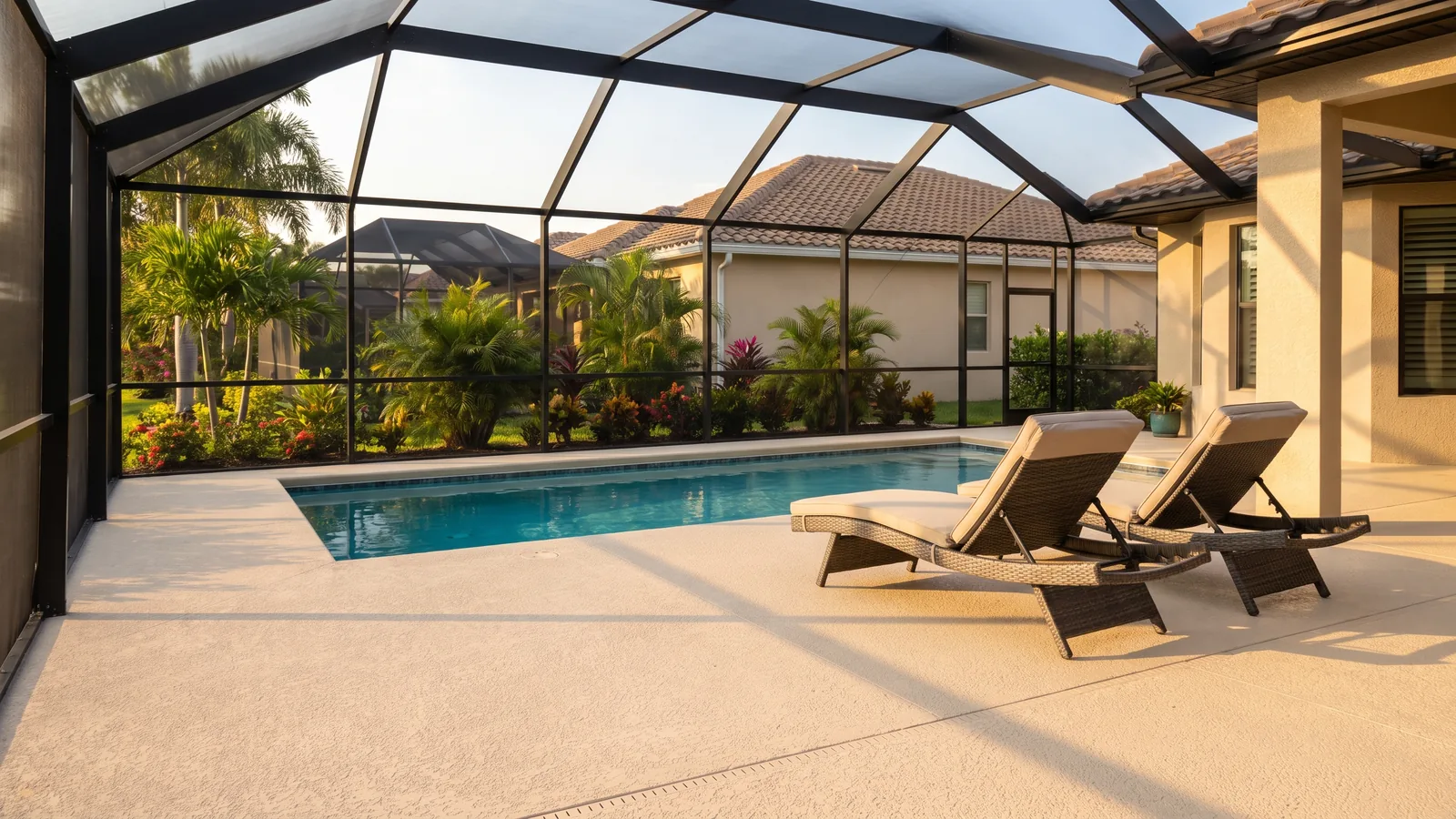
A pool deck here has a hard life: sun that bakes it to the touch by noon, chlorinated water splashed on it every day, sand shifting underneath, and a screen enclosure bolted to its edge that makes it awkward to fix. The good news is that most of what goes wrong is cosmetic or is one sunken section, and there's a fix short of tearing the whole thing out.
Our first call is honest triage. Stained, hot, hairline-cracked but solid: an acrylic cool-deck overlay or a knockdown texture, sealed, in a color that doesn't hold heat. Sunk toward the pool or rocking underfoot: polyurethane foam lifting through five-eighths-inch holes, then resurface. Broken up, hollow, or the coping is pulling away: cut out the bad sections, re-pour with dowels, then overlay the whole deck so it matches. And when you want a bigger deck, an outdoor kitchen, or a new pool going in, we pour it new — slab thickness for the sand, slope to the deck drains, expansion joint at the shell, and anchor points for the cage contractor.
What's included
Deck triage
We tell you plainly whether you're looking at a resurface, a lift, a partial replacement or a new deck — and price the one you need.
Cool-deck & knockdown overlays
Acrylic overlays in heat-reflecting colors, knockdown or spray texture for grip, sealed against chlorine and sun.
Foam lifting
Sunken sections lifted through small holes, voids filled, no cage panels removed. Done in a morning.
New pool decks
Poured to the pool builder's elevations with a thickened edge, expansion joint at the shell, slope to drains, cantilever or coping edge.
Cage-friendly
We work around and under existing enclosures; pads for cage posts and screen-room extensions poured to the enclosure contractor's layout.
Permits
New decks and enclosure slabs permitted with the City of Port St. Lucie; resurfacing usually doesn't need one.
Pool deck and resurfacing costs in Port St. Lucie, FL
| Job | Typical price | Notes |
|---|---|---|
| Cool-deck / knockdown resurfacing (600–800 sq ft deck) | $3,000 – $6,500 | $4–$8/sq ft, sealed |
| Foam lifting of sunken deck sections | $800 – $2,500 | Then resurfaced to match |
| Section replacement (per 8×8 panel) | $900 – $1,800 | Dowelled, finish-matched |
| New pool deck, 600–900 sq ft, textured | $8,000 – $16,000 | Coordinated with pool builder |
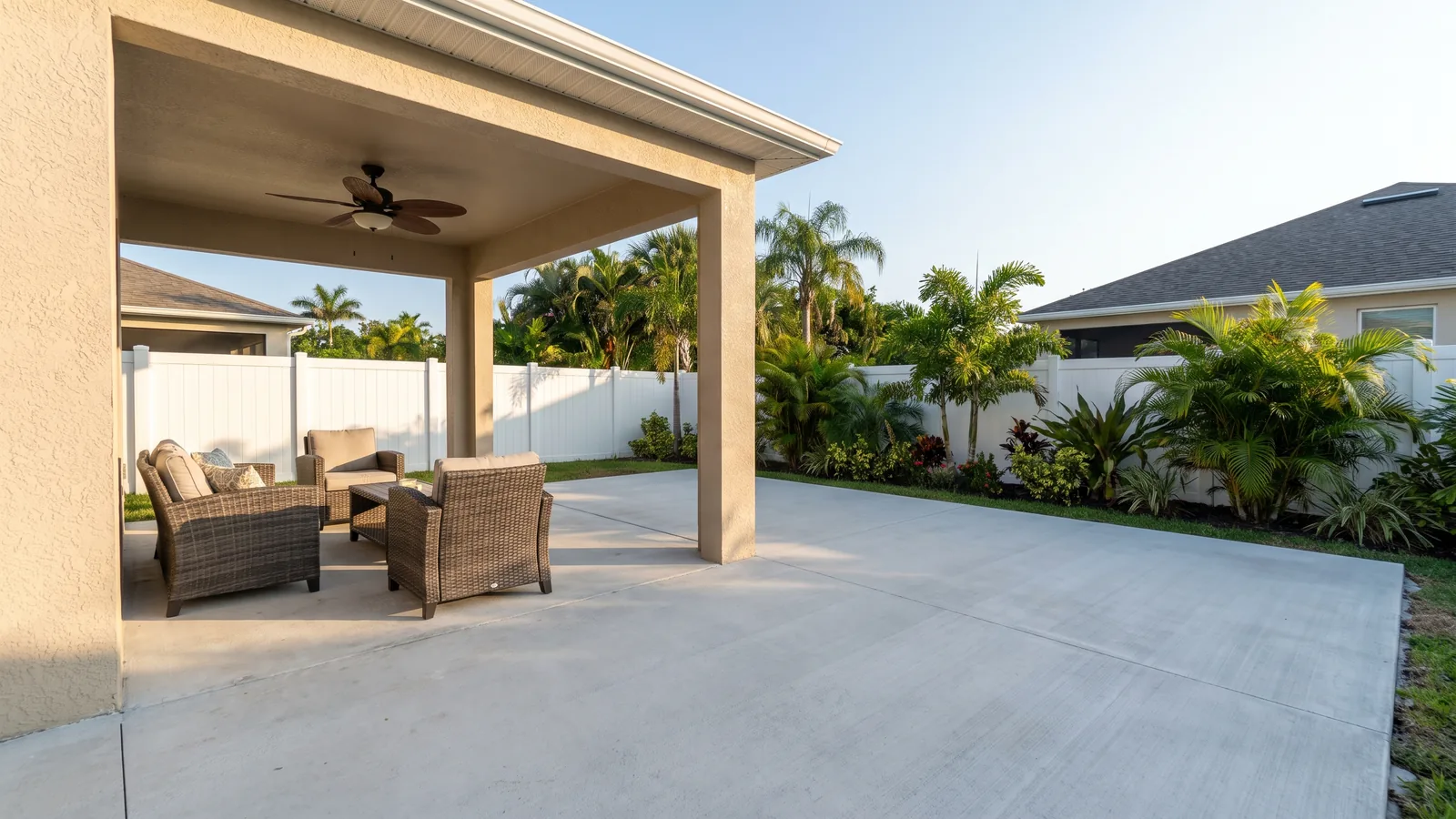
| Deck extension or summer-kitchen pad | $1,800 – $4,500 | Inside or outside the cage |
| Pressure wash, crack fill & reseal only | $700 – $1,500 | Maintenance option |
These are 2026 Treasure Coast ranges so you can budget. Your written price is itemized — tear-out, base, steel, concrete, finish, permits, culvert if any — and good for 30 days.
Recent work
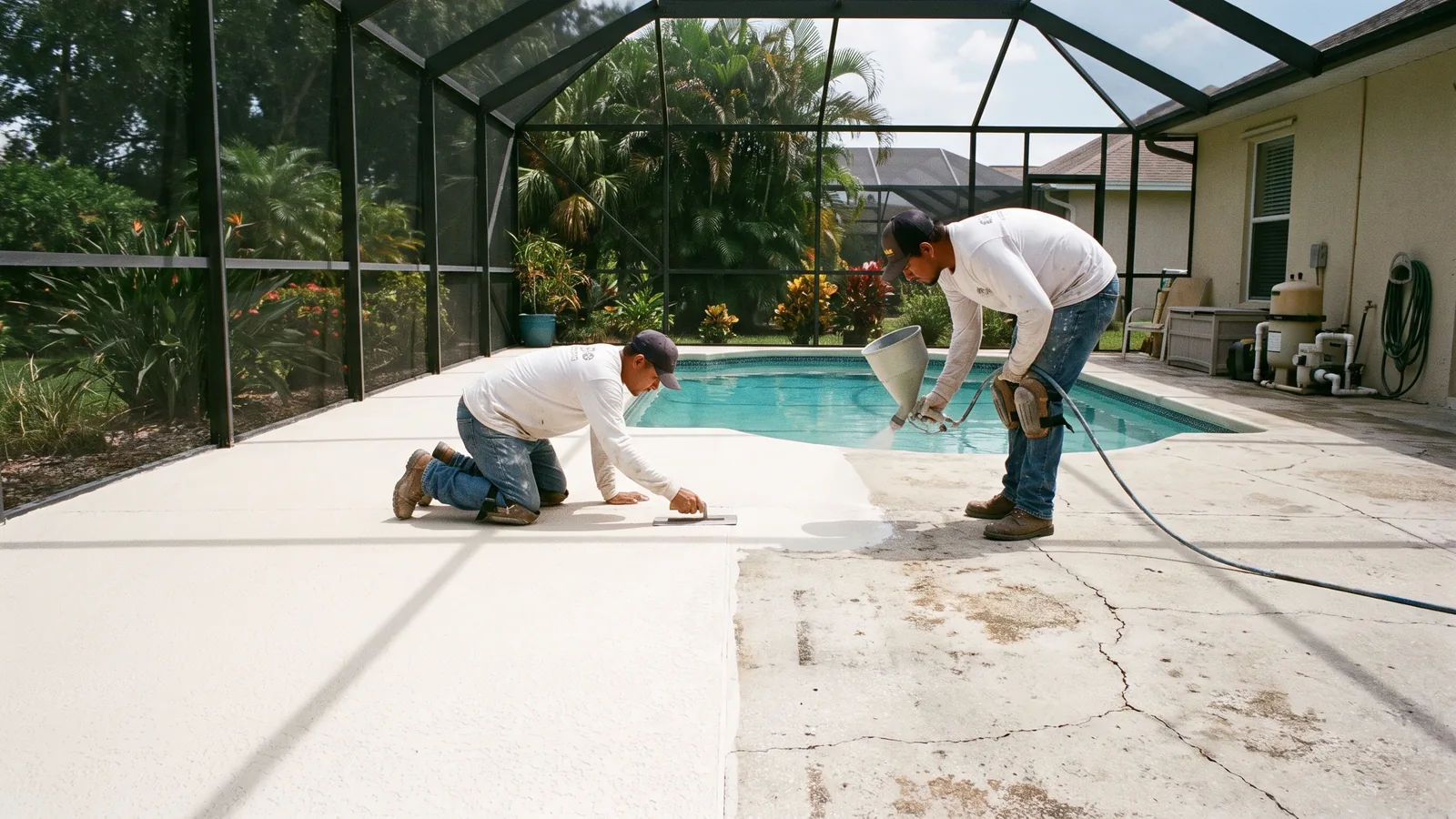
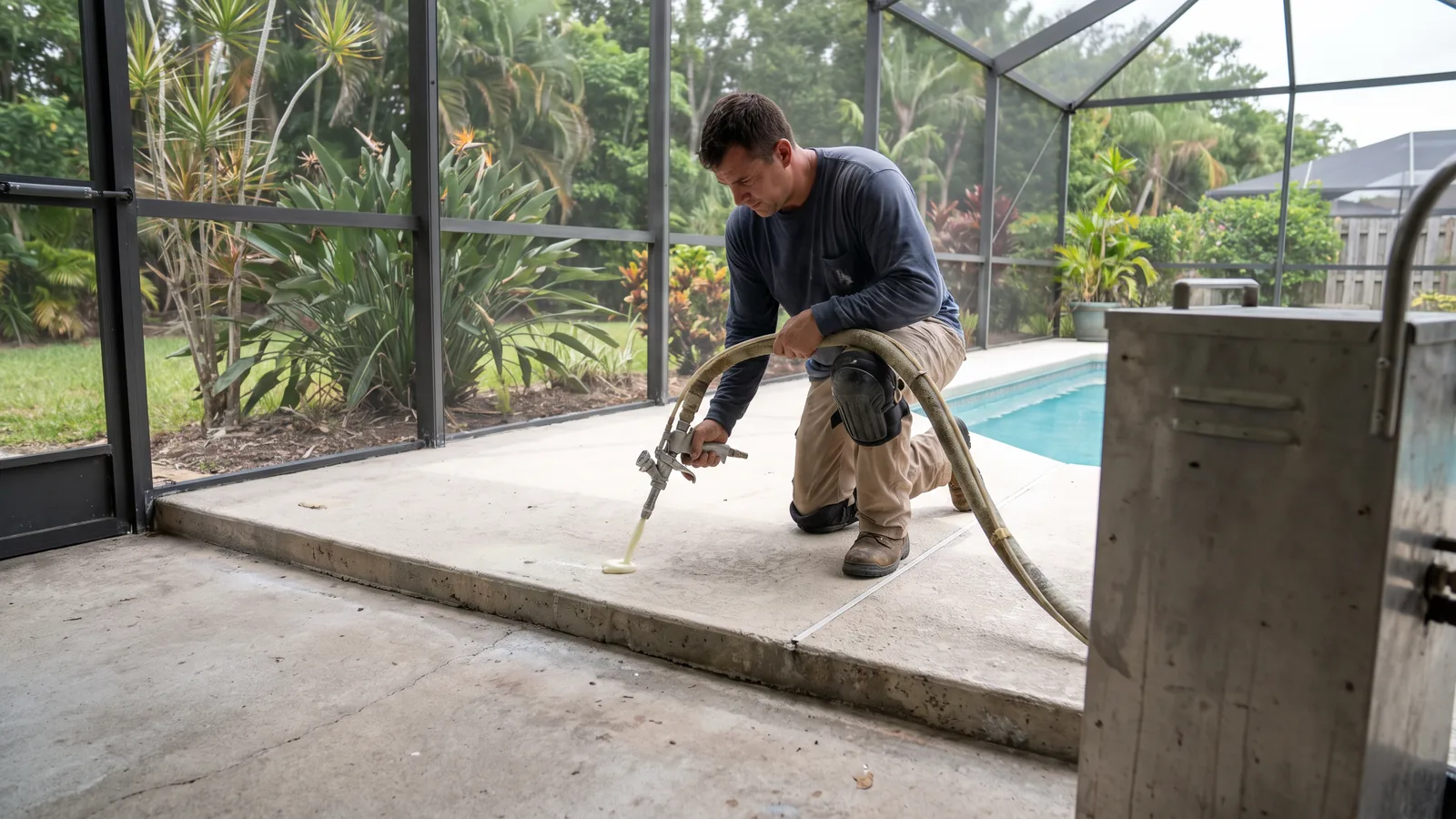
Questions we get about pool decks & resurfacing
How much does pool deck resurfacing cost in Port St. Lucie?
$4 to $8 per square foot for an acrylic cool-deck or knockdown overlay, so $3,000 to $6,500 for a typical 600- to 800-square-foot deck. Foam lifting of sunken sections and replacing broken panels are priced on top, itemized.
Do I have to remove the screen enclosure?
No. We resurface, lift and replace sections with the cage in place. For a full new deck under an existing cage we work panel by panel; for a new pool the deck goes in before the enclosure.
Why is my pool deck sinking toward the pool?
Water. The soil beside a pool shell gets saturated from splash-out, backwash and the deck drains, and fine sand carries away. The deck settles toward the void. Foam lifting fills it; fixing where the water goes keeps it fixed.
Is a cool-deck coating really cooler?
Noticeably. Light acrylic overlays reflect heat and the texture holds a thin layer of air; a deck that was too hot to stand on at 2 PM becomes walkable. Dark stamped colors do the opposite, so we steer pool decks toward light sand, ivory and grey tones.
How long does resurfacing last?
Eight to twelve years with a reseal every two or three, in a Treasure Coast sun and chlorine environment. We'll leave you the product and color codes so it can be touched up.
Will it be slippery when wet?
Not with a knockdown or spray texture and a non-slip additive in the sealer. A smooth trowel finish is the one thing we won't put around a pool.