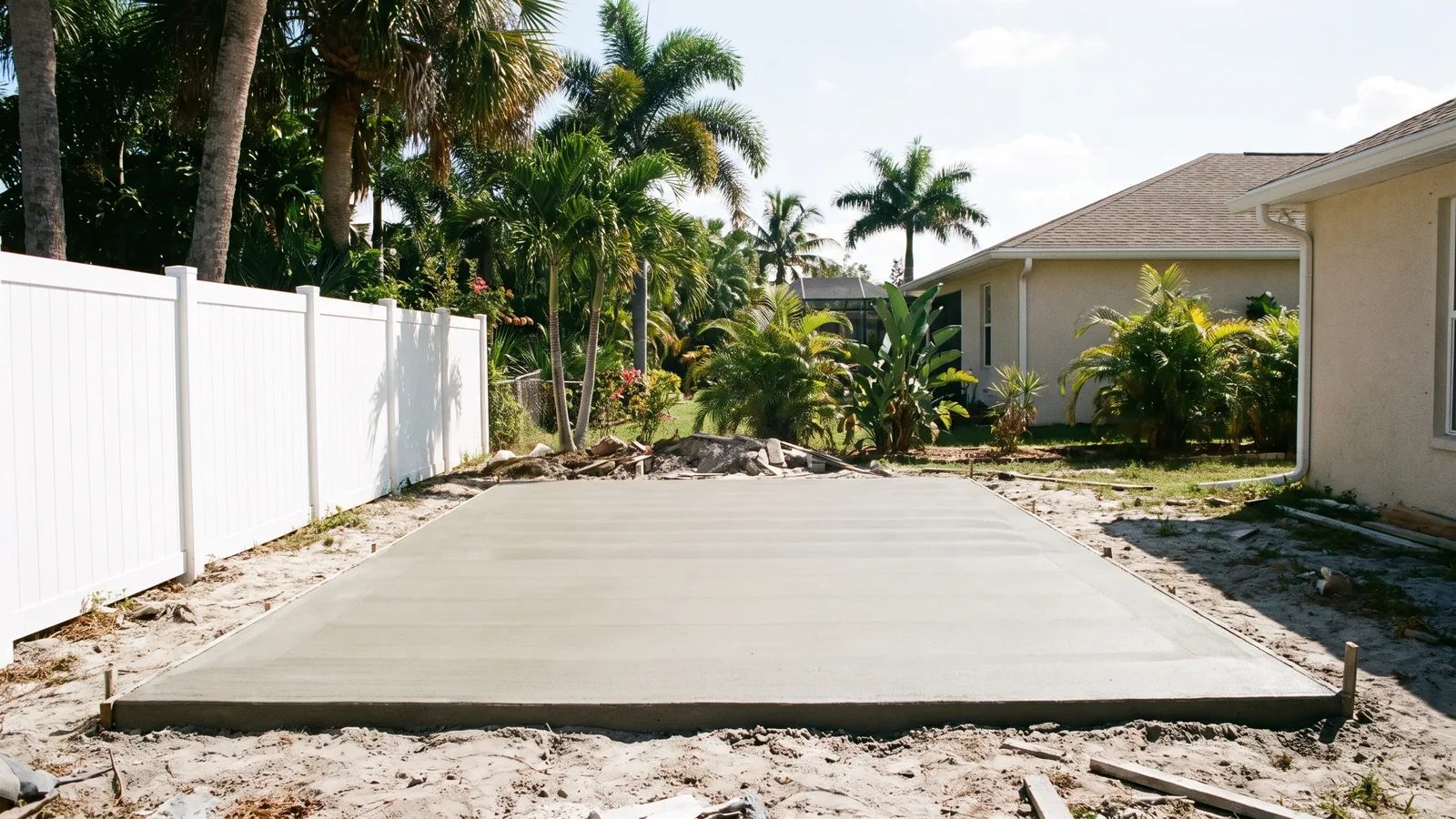
Quarter-acre lots and no HOA make Torino, Sandpiper, Southbend and the older GDC sections the boat-and-shed capital of the Treasure Coast, and the newer communities all want a generator pad after the last hurricane season. These are small pours, but the sand and the water table make them easy to get wrong: a shed slab poured at grade sits in an inch of water every summer; a boat pad on uncompacted fill ruts under the trailer tires; a generator pad that isn't level throws the unit out of spec.
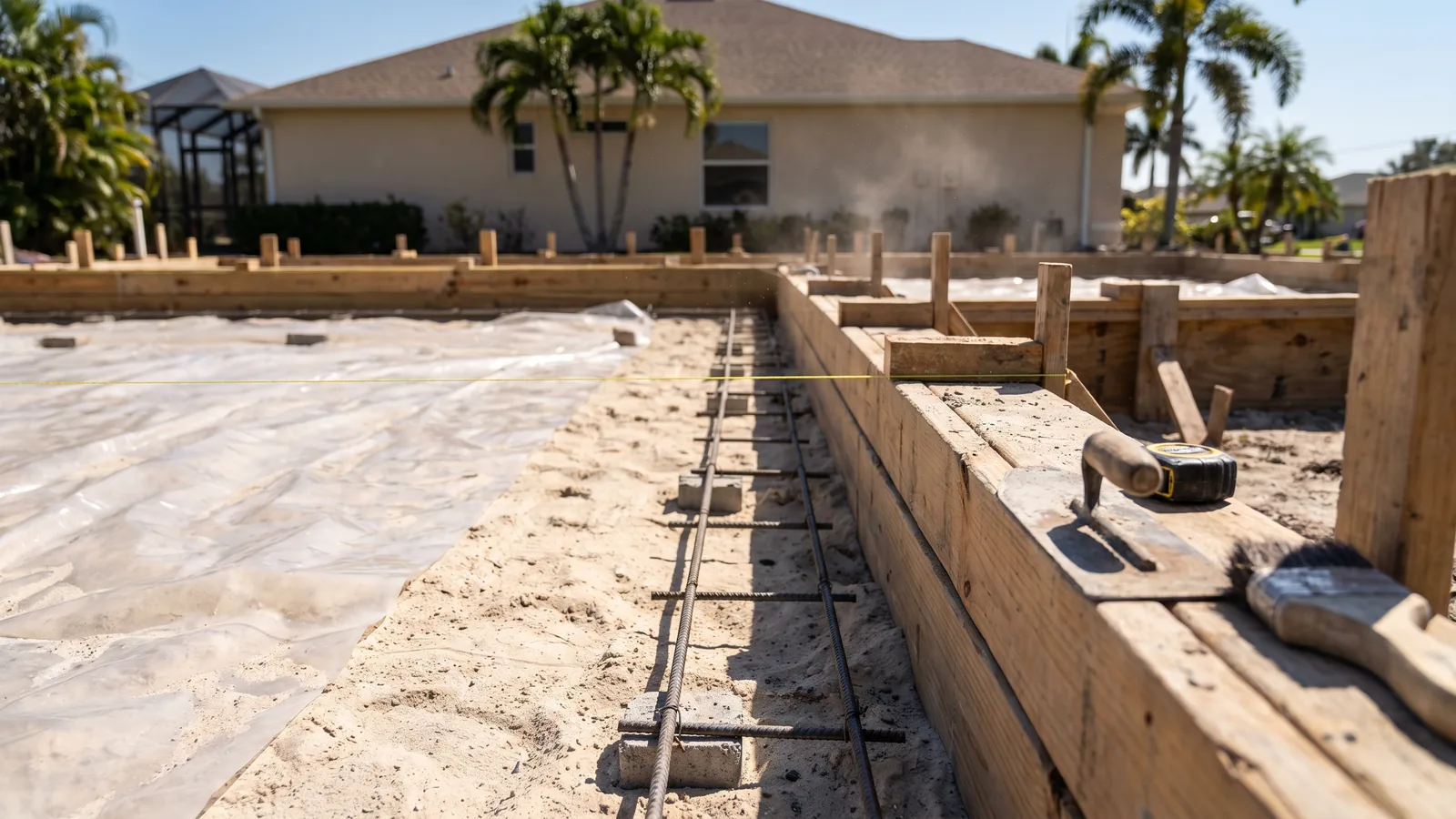
We build the pad up: fill compacted in lifts so the top of the slab sits above the wet-season water line, a thickened edge, fiber mix with steel, and for boat and RV pads five to six inches with the tires' path in mind. Anchor bolts or J-bolts set for the shed manufacturer's template; the generator pad sized and leveled to the installer's spec with conduit sleeves where they want them. Sheds over the city's size threshold and anything with electrical are permitted; we handle the site plan and the permit under our license.
What's included
Built up, not dug in
Fill compacted in lifts so the slab top sits above the wet-season water table; edges thickened.
Sized to the equipment
Shed slabs to the manufacturer's footprint and anchor pattern; boat and RV pads for the trailer's track; generator pads to the installer's spec.
Reinforced
Fiber mix plus steel on chairs; 5–6 inches for boat, RV and equipment loads.
Permits & site plan
City of Port St. Lucie or St. Lucie County permit where required (larger sheds, electrical, drainage changes); setbacks and easements checked.
Access
Side-yard gates, fences and irrigation lines worked around; sod cut and replaced.
Cleanup
Forms pulled, edges backfilled, slab ready for the shed crew or the boat.
Slab and pad costs in Port St. Lucie, FL
| Job | Typical price | Notes |
|---|---|---|
| Shed slab, 10×12 to 12×16, 4" reinforced | $1,400 – $2,600 | Anchor bolts set to template |
| Boat / RV pad, 12×35 to 14×45, 5–6" | $3,800 – $7,000 | Side-yard access |
| Generator pad, 4×8 to 5×10, 6" | $650 – $1,200 | Leveled to installer spec |
| AC / pool-equipment pad | $350 – $700 | Often added to another pour |
| Pump-house or well slab | $600 – $1,200 | Above wet-season grade |
| Fill & compaction where the lot sits low | $400 – $1,800 | Itemized |
These are 2026 Treasure Coast ranges so you can budget. Your written price is itemized — tear-out, base, steel, concrete, finish, permits, culvert if any — and good for 30 days.
Recent work
Questions we get about slabs, pads & sheds
Do I need a permit for a shed slab in Port St. Lucie?
For sheds over the city's size threshold, anything with electrical, and anything that changes drainage, yes — the slab is inspected as part of the shed permit. Small sheds without utilities often don't need one. We check your address and tell you which.
Can I park my boat on the side of my house?
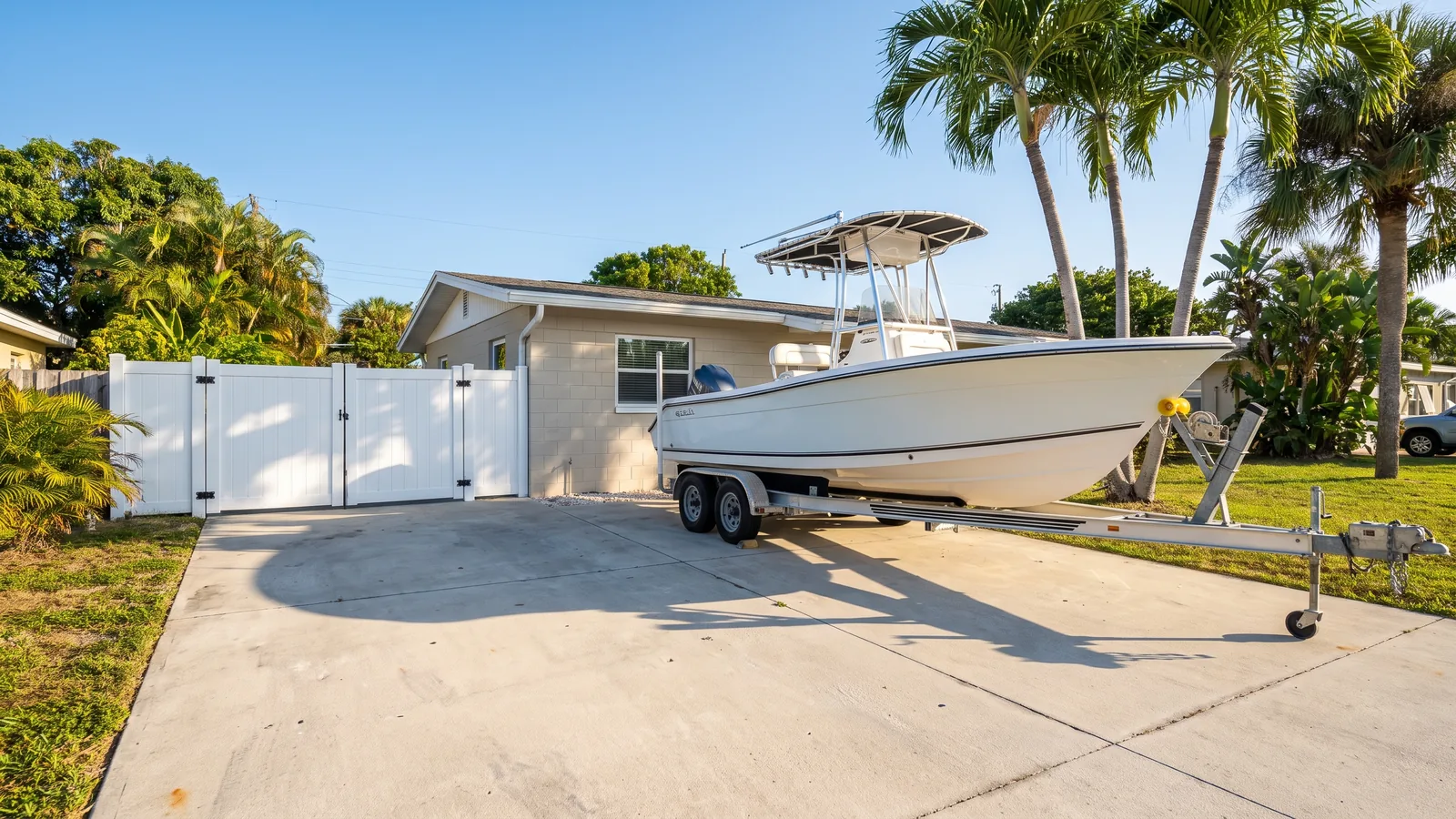
In Torino, Sandpiper, Southbend and most non-HOA GDC lots, yes, on a proper pad behind the front setback. HOA communities like Tradition and St. Lucie West restrict it. The pad itself is 5 to 6 inches with reinforcement so the trailer tires don't crack it.
How thick should a generator pad be?
Six inches, reinforced, sized to the installer's template and dead level. Most installers want a pad a few inches larger than the unit on every side and conduit sleeves cast in; send us their spec sheet and we'll pour to it.
What about the water table?
In the wet season it's a foot or two down in most of the city. A slab poured at grade will have wet edges every summer, so we build the pad up on compacted fill with a thickened edge. Sheds stay dry; pads don't grow algae.
Can you pour the pad before the shed is delivered?
Yes — send us the manufacturer's footprint and anchor drawing. Seven days' cure before the shed crew, fourteen for a heavy prefab.